
Why Did My Car Insurance Go Up?
- Anthony. M
- Jun 1
- 4 min read
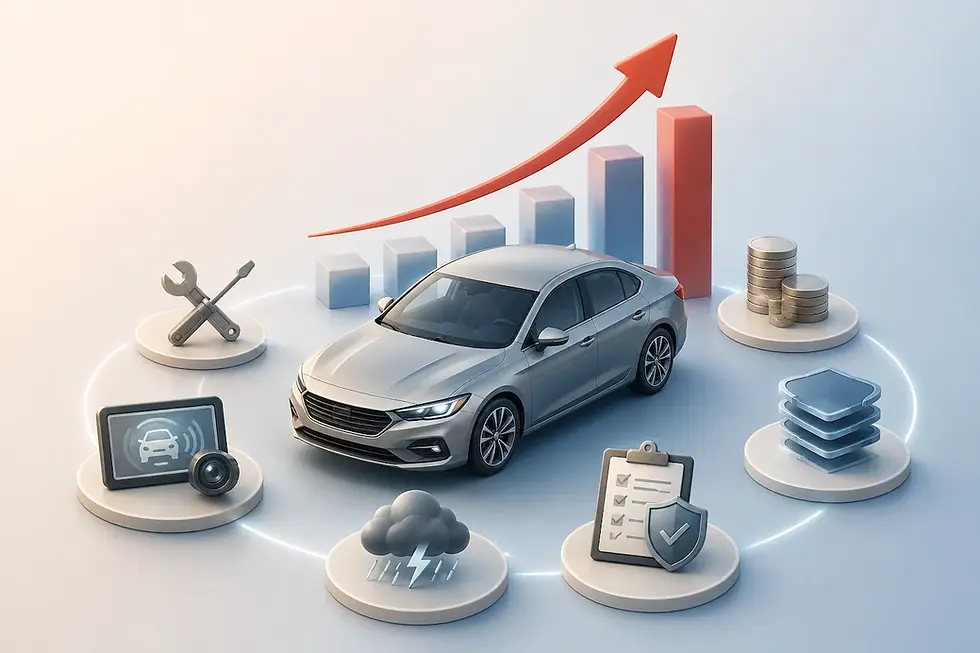
Opening a renewal notice and discovering your premium increased can be frustrating—especially if you haven't filed a claim, received a ticket, or made any major changes to your policy.
It's natural to wonder whether the increase is justified or if you're simply being charged more for the same coverage.
The reality is that car insurance premiums can change for many reasons, and not all of them are directly related to your driving behavior.
Understanding why your premium increased is the first step toward deciding what to do next.
Direct Answer
Car insurance premiums can increase for many reasons.
Some increases are related to changes in your personal risk profile, such as accidents, violations, or claims. Others are caused by broader factors affecting insurance companies, including rising repair costs, medical expenses, severe weather losses, and overall industry trends.
As a result, your premium can sometimes increase even when nothing appears to have changed on your end.
Why Your Insurance Might Go Up
Most premium increases fall into one of two categories:
Reasons related to you
Reasons not directly related to you
Understanding the difference can help you identify why your premium may have changed.
Reasons Related to You
Insurance companies evaluate risk when determining premiums.
If certain aspects of your situation change, your premium may change as well.
Common examples include:
Accidents on your driving record
Traffic violations
Insurance claims
Adding drivers to your policy
Purchasing a different vehicle
Changing coverage levels
Moving to a different location
These changes can affect how an insurance company views the likelihood or cost of future claims.
Reasons Not Directly Related to You
This is the area many drivers overlook.
Insurance pricing is influenced by more than individual driving behavior.
For example:
Rising Repair Costs
Modern vehicles contain advanced technology, sensors, cameras, and safety systems that can make repairs significantly more expensive than in the past.
Even relatively minor accidents can result in costly repairs.
Increasing Medical Costs
When accident-related injuries become more expensive to treat, insurance companies often face higher claim costs.
Severe Weather and Natural Disasters
Large numbers of claims from storms, floods, wildfires, hurricanes, or other disasters can affect insurance pricing in certain regions.
Industry-Wide Claim Trends
Insurance companies continually analyze claims data.
If claims become more frequent or more expensive overall, premiums may increase even for drivers with clean records.
Inflation
When the cost of parts, labor, vehicles, and services increases, insurance claim costs often rise as well.
Insurance pricing frequently reflects these broader economic conditions.
Can Your Insurance Go Up Even If You Had No Accidents?
Yes.
Many people assume that a rate increase automatically means they did something wrong.
That isn't always the case.
Even if you have:
No accidents
No tickets
No claims
Your premium may still increase because of broader factors affecting insurance costs.
This is one reason why it is important to understand the cause of a premium increase before assuming it is related to your driving record.
Does a Higher Premium Mean You Should Switch Companies?
Not necessarily.
A premium increase does not automatically mean your insurer is offering a poor value.
However, it may be a good opportunity to review your policy and compare alternatives.
Different insurance companies evaluate risk differently.
As a result, two companies may offer similar coverage at significantly different prices.
Before making a decision, it is important to compare coverage—not just premiums.
A lower price is not always a better deal if it comes with reduced protection.
What Should You Do After a Rate Increase?
If your premium increases, consider the following steps:
Review Your Renewal
Check whether any changes were made to your coverage, limits, deductibles, drivers, or vehicles.
Confirm Your Coverage Still Meets Your Needs
Your situation may have changed since you originally purchased the policy.
Reviewing your coverage can help determine whether adjustments are appropriate.
Ask About Available Discounts
Insurance companies often offer discounts that may not automatically apply.
It can be worth asking whether additional discounts are available.
Compare Quotes
Obtaining quotes from multiple insurers can help determine whether your current premium remains competitive.
When comparing quotes, make sure the coverage types and limits are consistent so the comparison is meaningful.
The Better Question
Instead of asking:
Why did my insurance go up?
Ask:
Does the coverage I'm currently have still provide good value for the price I'm paying?
That question shifts the focus away from the increase itself and toward the overall value of the policy.
Where Should You Start?
If a premium increase has you thinking about changing your policy, it's important to understand exactly what protection you're changing before making a decision.
The Coverage section of the Auto Insurance Guide explains how the major coverage types work, what they protect, and how different coverage choices affect your overall level of protection.
Understanding coverage first makes it easier to evaluate options such as increasing deductibles, reducing coverage, or comparing quotes from other insurers.
→ Continue to the Coverage Section of the Auto Insurance Guide
Summary
Car insurance premiums can increase for many reasons.
Some are related to changes in your personal circumstances, while others result from broader factors affecting the insurance industry.
Understanding the reason behind a premium increase can help you make informed decisions about your coverage, evaluate alternatives, and determine whether your current policy still provides good value.
Frequently Asked Questions
Why did my insurance go up if I had no accidents?
Insurance premiums can increase for reasons unrelated to your driving record, including rising repair costs, medical expenses, inflation, severe weather losses, and industry-wide claim trends.
Can insurance rates increase without a claim?
Yes. Insurance companies consider many factors beyond claims history, and premiums can increase even if you have not filed a claim.
Why does car insurance increase every year?
Premiums may increase over time due to changes in claim costs, inflation, repair expenses, medical costs, and other industry factors.
Should I switch insurance companies after a rate increase?
Not automatically. It's usually best to review your coverage, compare quotes, and evaluate overall value before making a decision.
How can I lower my car insurance premium?
Possible options include reviewing your coverage, adjusting deductibles, qualifying for discounts, maintaining a clean driving record, and comparing quotes from multiple insurers.
Related Articles
Important Note
This article is for informational purposes only and should not replace the terms of your actual insurance policy.
Written by Anthony M., insurance research contributor focused on auto insurance at Insurance Policy Authority.


Comments