
Dwelling Coverage: The Foundation of Your Homeowners Insurance Policy
- Walter. J
- Jan 14, 2025
- 4 min read
Updated: Apr 25

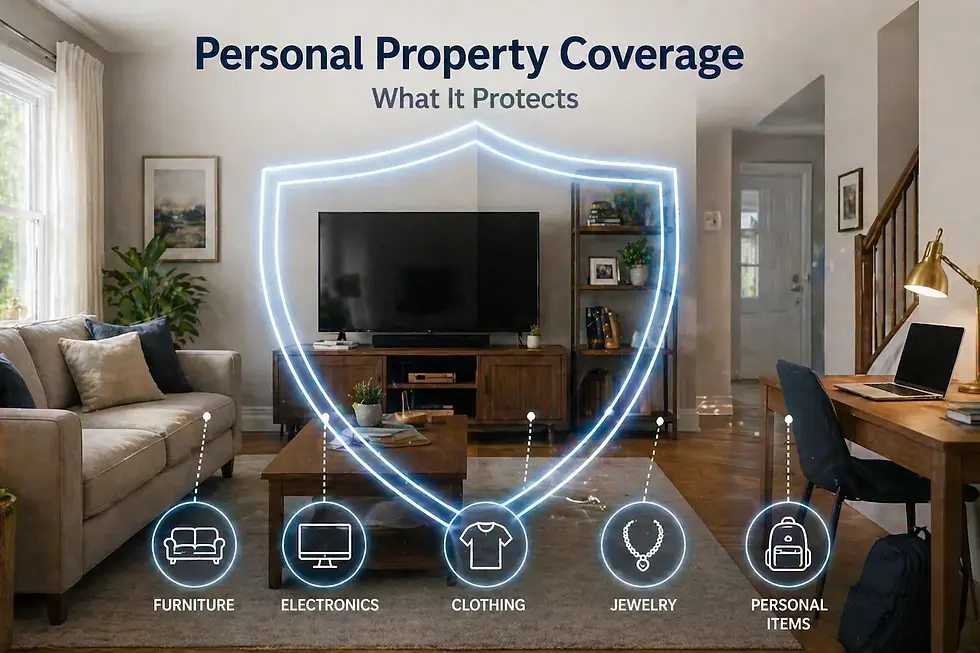
When people think about homeowners insurance, they often picture protection for everything inside their home — furniture, electronics, clothing, and personal belongings. While those items are important, the true foundation of any homeowners policy is dwelling coverage. This is the part of the policy that protects the physical structure of your home itself, and it is often the most misunderstood.
Dwelling coverage determines whether you can rebuild after a major loss or whether you are left covering a massive gap out of pocket. Yet many homeowners choose this coverage amount once, usually at closing, and never revisit it again.
Understanding how dwelling coverage works — and how it can quietly fall out of alignment — is essential to having meaningful protection.
What Dwelling Coverage Actually Protects
Dwelling coverage applies to the main structure of your home. This includes the walls, roof, foundation, attached garage, and built-in components like cabinetry, plumbing, wiring, and permanently installed fixtures.
If your home is damaged or destroyed by a covered peril such as fire, wind, hail, or vandalism, dwelling coverage is what pays to repair or rebuild it. It does not cover land, landscaping, or most detached structures, which are handled under separate portions of the policy.
Because it covers the structure itself, dwelling coverage typically represents the largest dollar amount on your policy declarations page.
Replacement Cost vs. Market Value
One of the most common misconceptions about dwelling coverage is that it should match the home’s market value. In reality, market value and rebuilding cost are very different things.
Market value includes factors like location, school districts, land value, and local demand. Dwelling coverage is concerned only with what it would cost to reconstruct the home using similar materials and workmanship if it were destroyed.
In some areas, rebuilding costs can be higher than market value. In others, especially where land values are high, rebuilding costs may be significantly lower. Insuring based on market value can lead to underinsurance or overinsurance, depending on location.
This distinction is critical and often overlooked.
How Insurers Calculate Dwelling Coverage
Insurers typically use reconstruction cost estimators to calculate appropriate dwelling limits. These tools consider factors such as square footage, construction type, roof materials, interior finishes, and local labor costs.
While these estimates are helpful, they are not guarantees. They are snapshots based on assumptions at a specific moment in time. Changes in construction costs, labor shortages, and material inflation can cause rebuilding costs to rise faster than policy limits.
This is one reason why a dwelling coverage amount that was adequate five years ago may no longer be sufficient today.
The Risk of Underinsuring Your Home
Underinsurance is one of the most serious risks homeowners face. If your dwelling coverage limit is too low and a major loss occurs, the insurer will only pay up to the policy limit — even if rebuilding costs far exceed it.
Many homeowners assume that partial losses are safe because the policy will “cover what it can.” But even partial losses can exceed expectations. A severe kitchen fire, for example, can require structural repairs, code upgrades, and complete reconstruction of multiple areas of the home.
If coverage limits are insufficient, homeowners may have to fund the difference themselves or make difficult decisions about rebuilding quality.
Inflation and Rising Construction Costs
Construction costs rarely stay flat. Labor rates, material prices, supply chain disruptions, and changes in building codes all contribute to rising rebuild costs.
In recent years, many homeowners have seen rebuilding costs rise much faster than general inflation. Policies that were never updated can fall dangerously behind reality without any obvious warning signs.
Some policies include inflation guard endorsements that automatically increase dwelling limits annually. While helpful, these adjustments may not fully keep pace with real-world construction costs, especially after periods of rapid inflation.
Periodic review is still necessary.
Ordinance and Law Considerations
Another overlooked factor in dwelling coverage is building code compliance. If your home was built decades ago, current codes may require upgrades during reconstruction that did not exist when the home was originally built.
Standard dwelling coverage may not pay for these required upgrades unless ordinance or law coverage is included. Without it, homeowners could face significant additional costs even after a covered loss.
This is especially relevant in older homes, where electrical, plumbing, or structural standards have changed substantially over time.
Common Mistakes Homeowners Make
Many dwelling coverage problems stem from assumptions rather than decisions. Homeowners may assume the insurer “handles the math,” or that the policy will automatically adjust when home values rise.
Another common mistake is reducing dwelling limits to lower premiums without understanding the potential consequences. While lowering coverage may save money in the short term, it can expose homeowners to catastrophic financial risk.
Dwelling coverage should be viewed as protection against worst-case scenarios, not as an area for optimization or shortcuts.
How Often Dwelling Coverage Should Be Reviewed
Dwelling coverage should be reviewed at least once a year, ideally at renewal. It should also be revisited after major renovations, additions, or upgrades that increase rebuilding costs.
Even small changes — such as upgraded kitchens, flooring, or roofing materials — can significantly affect reconstruction expenses. If those changes are not reflected in the policy, coverage may lag behind reality.
A brief annual review can prevent years of unnoticed exposure.
Dwelling Coverage vs. Other Home Insurance Components
While personal property, liability, and loss of use coverage are all important, dwelling coverage anchors the entire policy. Other coverages are often calculated as percentages of the dwelling limit, meaning errors here can cascade into other areas of the policy.
Getting the dwelling amount right improves the accuracy and effectiveness of the entire homeowners insurance structure.
Why Dwelling Coverage Deserves More Attention
Homeowners insurance is often purchased once and mentally “checked off” as a completed task. Dwelling coverage, however, is not static. It reflects a living structure, evolving costs, and changing risk environments.
Understanding what dwelling coverage does — and what it does not do — allows homeowners to make informed decisions rather than reactive ones after a loss.
The goal of homeowners insurance is not simply to have a policy, but to have coverage that functions as intended when it matters most. Dwelling coverage is the foundation of that protection, and it deserves deliberate attention.
Important Note
This article is for informational purposes only and should not replace the terms of your actual insurance policy.
Written by Walter J., insurance research contributor focused on homeowners insurance at Insurance Policy Authority.
Like what you see here? Then...
Check out our Amazing!


Comments