Disclaimer: We share general insurance tips and insights — not licensed advice. Always check with a qualified insurance professional before making decisions. See full Disclaimer.

Insurance Policy Authority
Insurance advice for auto, home, and life.
Auto Insurance: Other Factors
If you completed your comparisons in the previous section and found a clear stand-out company offering the best deal, then your decision is straightforward. In that case, this section becomes optional. You may still review these factors to better understand the company you chose, but it is not necessary.
This section is designed for situations where multiple companies are offering similar deals. When there is no clear winner based on price and coverage alone, additional factors can help separate the top options.
Beyond pricing, insurance companies differ in how they operate, support customers, and handle key interactions. These differences can influence your overall experience with the company over time. By reviewing and comparing these factors, you can make a more complete and confident decision.
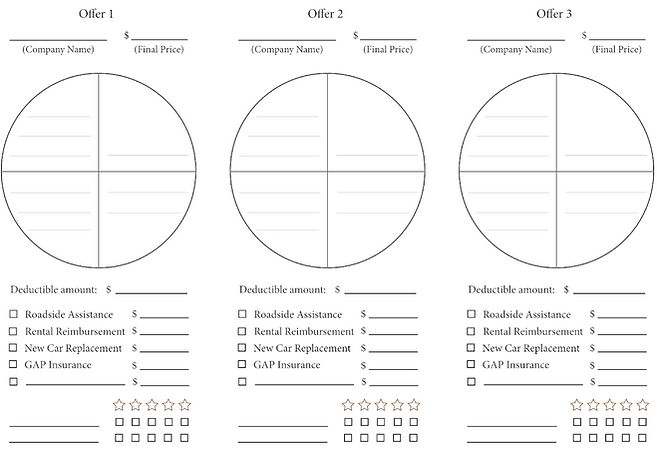
When using the Offer Comparison Tool, you have space to evaluate up to two additional factors. Start with the one that matters most to you and assign it to the first position.
For each factor, gather information from reliable sources. After reviewing the companies, assign a rating—5 stars to the strongest performer, followed by 4 stars, and so on. If the first factor does not clearly separate the options, move on to the second.
Below are some of the most common factors used to compare insurance companies. They are not listed in any particular order, as their importance depends on your personal priorities.
Rewards & Benefits
Many insurance companies offer rewards and benefits in the form of cashback, discounts, or other incentives.
These programs can help reduce the overall cost of your policy over time. However, unlike upfront discounts, they typically do not affect the initial price or quote. Instead, they are earned during the policy period and often take effect after a few months.
Common examples include:
-
Safe/Good Driver Discount – A reduced premium for maintaining a safe driving record over a set period (typically 3–6 months).
-
Safe/Good Driver Check – Cashback or a monetary reward for safe driving over a set period.
-
Accident-Free Discount – A discount applied for going a certain period without an accident.
-
Accident Forgiveness – A benefit that may prevent your premium from increasing after your first at-fault accident, often available to drivers with a strong history.
To compare this factor, review each company’s available programs by checking their website or contacting them directly. The company offering the most relevant and valuable options to you may be the better choice.
Claims Servicing / Resolution
Claims servicing is often grouped under customer service, but it deserves separate attention due to its importance.
For most people, filing a claim is the primary interaction they will have with their insurance company. It is also the moment when the service matters most. How a company handles claims can significantly impact your overall experience.
Claims service is typically evaluated based on speed, efficiency, and how smoothly claims are resolved. However, this type of data is not always publicly available.
As an alternative, you can review complaint data. If direct performance metrics are limited, complaints provide insight into where companies fall short. In simple terms, if we cannot easily measure how often companies perform well, we can look at how often problems occur.
A complaint index helps indicate how well an insurance company serves its customers. When reviewing this data, focus specifically on complaints related to claims handling.
To compare companies, identify which ones have the fewest claim-related complaints. Fewer complaints generally suggest a more reliable claims experience.
Many state insurance departments publish complaint data. You can access this information through the National Association of Insurance Commissioners (NAIC) website or its Consumer Information Source tool. www.naic.org/state_web_map.htm
Technology & Support
In today’s environment, the way you interact with your insurance company can matter just as much as the coverage itself—especially if you prefer digital access and convenience.
Technology and support options determine how easily you can manage your policy, get information, and reach assistance when needed.
Common features include:
-
Mobile app
-
Website account access
-
Online chat
-
Telephone support
-
Educational resources (blogs, FAQs, or forums)
For some people, missing one or more of these options can be a drawback.
To compare companies, review the tools and support channels they offer. You can rate them based on the features that matter most to you or simply on overall availability.
Customer Service
Customer service refers to all interactions with the insurance company outside of filing a claim.
These interactions may include renewing your policy, asking questions, updating information, or addressing concerns. The quality of these experiences reflects how the company treats its customers on a day-to-day basis.
To evaluate customer service, look for complaints that are not related to claims handling. These can provide insight into issues such as communication, responsiveness, and overall support.
As with claims servicing, fewer complaints generally indicate a better experience.
You can find complaint data through the same sources mentioned earlier or by reviewing customer feedback available online.
Final Bit of Advice
At this point, you should have made your decision on which company to choose.
Before moving forward, take a few final steps to make sure everything is in order:
-
Read your policy – Review your policy documents carefully once you receive them. The terms should be clear based on what you’ve learned in this guide. If anything is unclear, contact the insurance company immediately.
-
Know what to do after an accident – While general steps include ensuring safety and exchanging information, each insurer may have specific instructions. Make sure you understand your company’s process. For a step-by-step walkthrough, refer to our guide on how to file an auto insurance claim.
-
Understand how to file a claim – Claims procedures vary by company. Take a moment to learn the exact steps required so you’re prepared if needed.
-
Keep proof of insurance accessible – Always have proof of insurance available in your vehicle or digitally, depending on your state’s requirements.
-
Pay your premium on time – Missed or late payments can lead to penalties, policy cancellation, or higher premiums at renewal.
Auto insurance is not a one-time decision. As your life changes, your coverage should evolve with it.
You may want to review your policy after major changes such as buying or selling a vehicle, moving, adding or removing drivers, or experiencing significant financial changes. Periodic reviews help ensure your coverage continues to match your needs.
You are now in a position to move forward with confidence, knowing you understand both the coverage you selected and the company providing it.
Expanding Beyond Standard Auto Insurance
This guide focused on auto insurance for standard vehicles such as cars, trucks, and SUVs. However, the same core principles apply to other types of vehicles as well.
Motorcycles, boats, RVs, classic cars, and luxury vehicles each come with unique risks, ownership considerations, and coverage needs that go beyond a standard auto policy.
Now that you understand how insurance works at a foundational level—including coverage, pricing, deductibles, and claims—you are better prepared to evaluate these specialized areas.
Below are dedicated guides that build on what you’ve learned and provide more focused insight for each vehicle type:
Motorcycle Insurance
Motorcycle Insurance Explained: How Coverage Works for Two-Wheel Vehicles
Boat & Watercraft Insurance
Boat Insurance Made Simple: Protecting Your Watercraft the Right Way
RV & Camper Insurance
RV Insurance Explained: Protecting Your Home on Wheels
Luxury & Exotic Vehicle Insurance
Luxury Car Insurance Explained: Why High-End Vehicles Need Specialized Coverage
Classic & Collector Car Insurance
Classic Car Insurance Explained: How Collector Coverage Works
Also, if you liked the Auto Insurance guide, you should definitely check out our Homeowners Insurance and Life Insurance guides below.